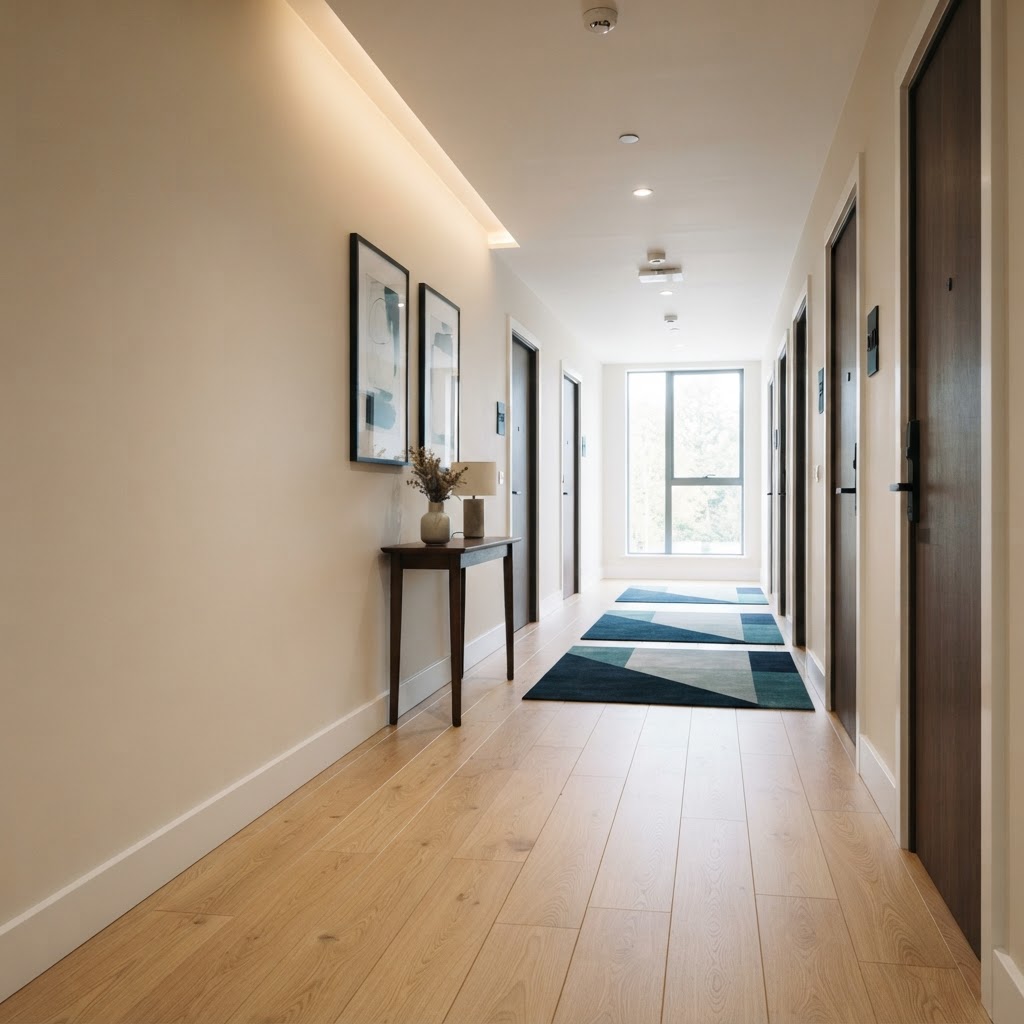
How Often Should Communal Hallways Be Cleaned?
The right communal hallway cleaning frequency depends on how the building is used. For businesses and managed premises, the right approach should be safe, consistent, documented and appropriate for how the building is actually used. This guide explains the practical points to consider when planning communal hallway cleaning services.
Communal hallways shape residents' first impression
Entrances, stairs, lifts and corridors are shared by everyone, so small problems quickly become visible. Dust, litter, fingerprints, tracked-in water and unpleasant odours can make an otherwise well-managed building feel neglected.
Build a site-specific schedule
The cleaning frequency should reflect resident numbers, pets, deliveries, flooring, external weather and building design. A useful schedule separates daily or frequent presentation tasks from periodic work such as carpet extraction, hard-floor machine cleaning, internal glass and high-level dusting.
Safety is part of cleanliness
Wet floors, unsecured equipment and blocked routes create avoidable risks. Cleaners should use warning signs, keep fire routes clear and report damaged flooring, failed lighting or leaks. Cleaning teams are often the people who see these issues first, so reporting should be part of the service.
Communicate with residents professionally
Property managers need clear visit records and a straightforward way to report concerns. Where disruptive work is planned, residents should receive notice. A professional cleaner should work discreetly and avoid leaving equipment or strong odours in shared areas.
What a good contractor should provide
- A site survey and written specification.
- Clear frequencies, responsibilities and exclusions.
- Trained staff, supervision and dependable absence cover.
- Suitable equipment, product controls and health-and-safety documentation.
- Audits, issue reporting and a named point of contact.
Frequently asked questions
How often should communal hallways be cleaned?
Small low-traffic blocks may need weekly visits, while busy developments can require several visits each week or daily attention.
Who is responsible for communal area cleaning?
Responsibility normally sits with the landlord, managing agent, freeholder or residents' management company, depending on the property arrangement.
Need a cleaning plan built around your premises? Contact Summit Clean to arrange a site survey and a clear, itemised quotation.
Related reading
The inspection standards, multi-site accountability and supervisor oversight described above are reinforced through our Summit Training Academy — so every operative delivers to the same benchmark across your portfolio.
Areas We Cover
Summit Clean provides communal area cleaning across Bristol and the wider South West, including:
- Bristol — BS1, BS2, BS3, BS4, BS5, BS6, BS7, BS8, BS9, BS10, BS11, BS13, BS14, BS15, BS16, BS20, BS32, BS34, BS35, BS36, BS37, BS48
- Bath — BA1, BA2, BA3
- Cheltenham — GL50, GL51, GL52, GL53, GL54
- Gloucester — GL1, GL2, GL3, GL4
- Weston-super-Mare — BS22, BS23, BS24
Get in touch to discuss your requirements.

