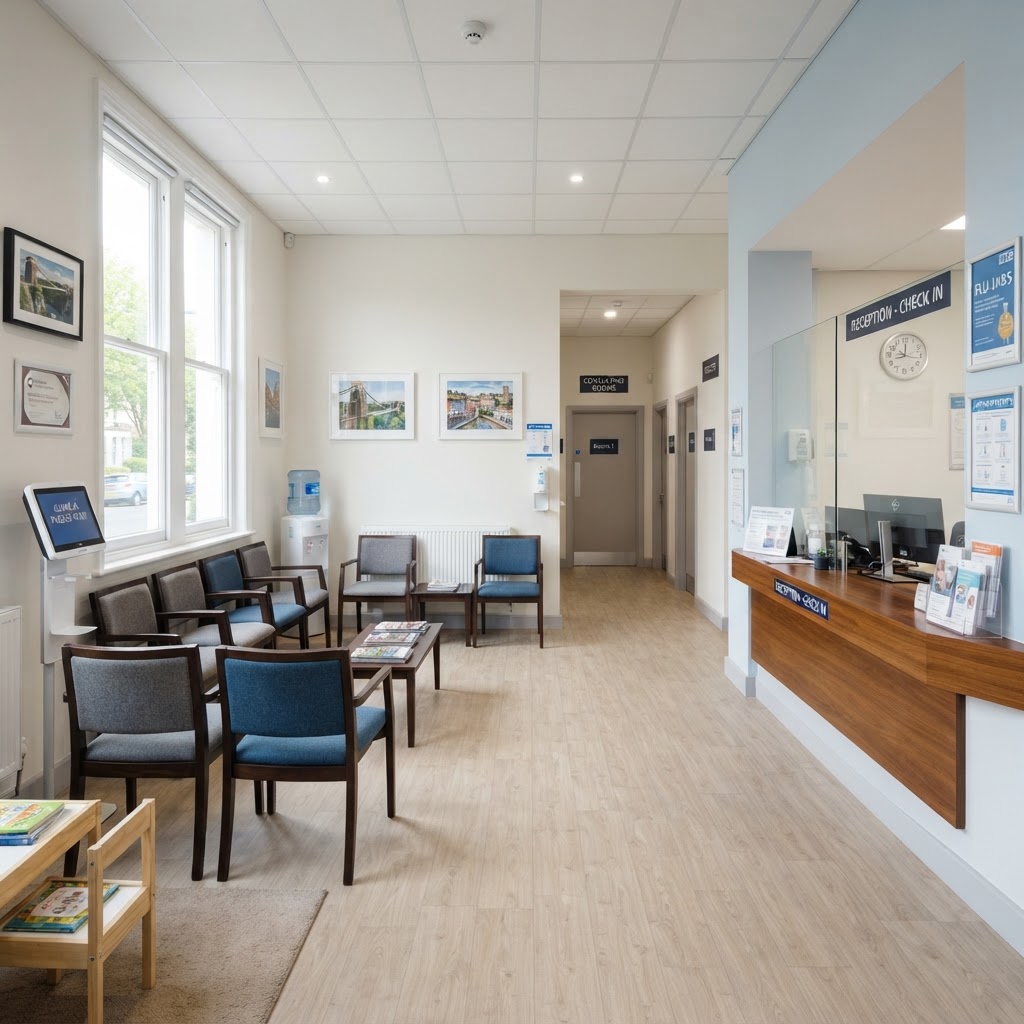
GP Surgery Cleaning Checklist for Bristol Practices
A GP surgery cleaning checklist helps staff and contractors understand exactly what must be cleaned, how often and by whom. For businesses and managed premises, the right approach should be safe, consistent, documented and appropriate for how the building is actually used. This guide explains the practical points to consider when planning cleaning services for GP surgeries.
Primary-care cleaning needs controlled processes
A GP surgery includes waiting rooms, consultation rooms, treatment areas, washrooms and staff spaces. Each has different use and risk. The cleaning plan should align with the surgery's own infection-prevention arrangements and authorised products.
Prioritise touchpoints and clinical areas
Door handles, chair arms, reception points, examination surfaces and washrooms receive repeated contact. Cleaning frequencies should reflect the patient flow and room use rather than applying one schedule to the whole building.
Train staff for the environment
Cleaners need clear instruction on colour coding, product dilution, contact times, waste, sharps escalation, contamination incidents and areas they must not enter without permission. They should understand that visible cleanliness and infection prevention are related but not identical.
Maintain audit-ready records
Schedules, training records, product information, audits and corrective actions should be organised and current. The surgery should be able to show what is cleaned, when, by whom and how problems are addressed.
What a good contractor should provide
- A site survey and written specification.
- Clear frequencies, responsibilities and exclusions.
- Trained staff, supervision and dependable absence cover.
- Suitable equipment, product controls and health-and-safety documentation.
- Audits, issue reporting and a named point of contact.
Frequently asked questions
Can cleaning take place while patients are present?
Some low-disruption tasks can, but clinical-room cleaning and more intensive work should be planned around safe access and privacy.
Should GP surgery cleaners receive specialist training?
They should receive training relevant to healthcare cleaning and the surgery's specific procedures.
Need a cleaning plan built around your premises? Contact Summit Clean to arrange a site survey and a clear, itemised quotation.
Related reading
The infection-control protocols, CQC-aligned processes and hygiene standards described above are taught and reinforced through our Summit Training Academy — so every operative understands clinical-grade cleaning before they set foot on site.
Areas We Cover
Summit Clean provides healthcare cleaning across Bristol and the wider South West, including:
- Bristol — BS1, BS2, BS3, BS4, BS5, BS6, BS7, BS8, BS9, BS10, BS11, BS13, BS14, BS15, BS16, BS20, BS32, BS34, BS35, BS36, BS37, BS48
- Bath — BA1, BA2, BA3
- Cheltenham — GL50, GL51, GL52, GL53, GL54
- Gloucester — GL1, GL2, GL3, GL4
- Weston-super-Mare — BS22, BS23, BS24
Get in touch to discuss your requirements.

